Clemens non Papa ~ Salva nos Christe Salvator
Roland de Lassus ~ In omnibus requiem
Dominique Phinot ~ Sancta Trinitas
Thomas Crecquillon ~ Pater peccavi
Thomas Tallis ~ Suscipe quaeso
William Byrd ~ Tribue Domine
In 1578 the Strasbourg imprimeur-libraire, or printer-bookseller Niklaus Wyriot published an anthology of some of the most popular large-scale choral pieces of the day – Selectae cantiones octo et septum vocum, in usum Academiae Reipublicae Argentoratensis (Argentoratum is the Latin name of Strasbourg). In doing so he did us the great service of pre-selecting some of the finest complex polyphony of the high Renaissance. The works by Clemens non Papa, Crecquillon, and Phinot exemplify the continental post-Josquin style – characterized by dense, pervasive imitation and expressive text-setting – which served as the foundational model for English composers. The Tallis and Byrd pieces both featured in their own landmark joint publication, Cantiones Sacrae of 1575. This collection was a deliberate attempt to showcase English musical prowess to the rest of Europe. Tallis’s Suscipe quaeso has been cited as a response to the monumental six- and seven-voice textures found in the motets of Dominique Phinot and Clemens non Papa. Similarly, Byrd’s Tribue Domine – one of his largest and most ambitious early works – draws heavily from the Franco-Flemish imitative style developed by Crecquillon and Lassus. All these motets explore deeply personal, often penitential texts. Crecquillon’s Pater peccavi and Tallis’s Suscipe quaeso both focus on themes of confession and divine mercy, a recurring focus for Catholic composers working during the religious upheavals of the Reformation. Together, they represent the peak of choral complexity during the late Renaissance.
Eamonn Dougan has been a regular Lacock director for the past thirteen years. 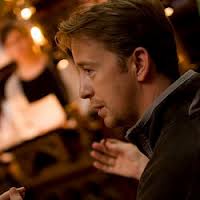 He is himself a singer and his courses always contain a substantial element of vocal technique. He is Associate Conductor of The Sixteen and founding Director of Britten Sinfonia Voices. Eamonn is an engaging communicator with a particular passion for the Sixteenth and Twentieth Century repertoire, Bach, the French and Polish Baroque. Recent engagements have seen Eamonn conduct Così fan tutte at the Ryedale Festival, Fauré Requiem with the newly formed Chiltern Arts Festival Chorus, and Mozart La finta giardiniera with The Orchestra of the Age of Enlightenment Experience Ensemble. Eamonn has a highly successful five-disc Polish Baroque series with The Sixteen. The first disc, music by Bartlomiej Pekiel, was shortlisted for a Gramophone Award (‘Richly dramatic’ – The Observer). The fifth disc, music by Marcin Mielczewski, was released to widespread critical acclaim in September 2017. Since 2008 Eamonn has been a Visiting Professor to the Guildhall School of Music and Drama, London, where he teaches ensemble singing and directs the Guildhall Consort.
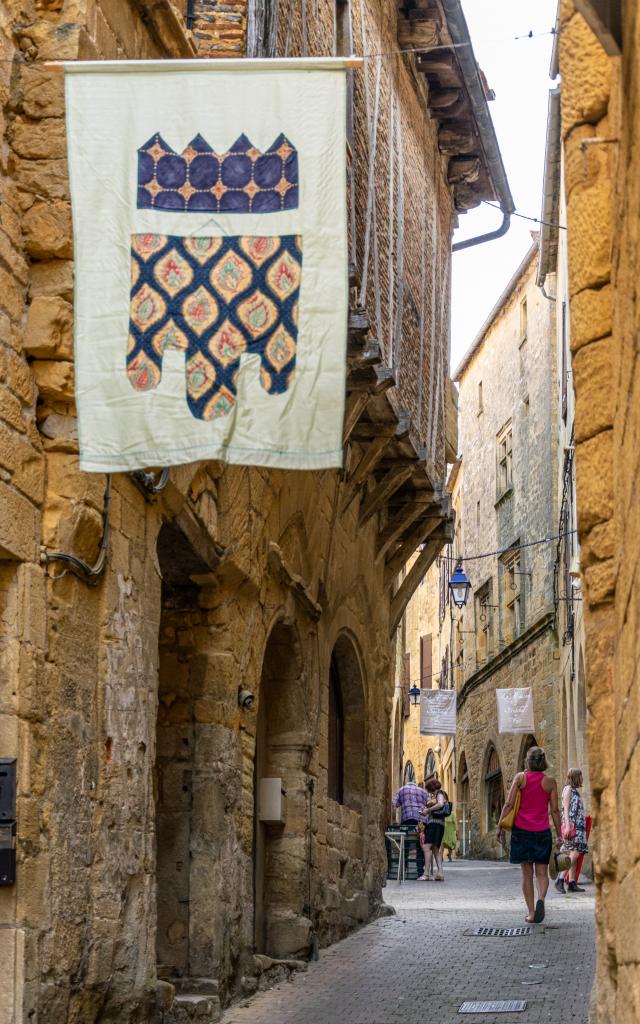
Gourdon en Quercy
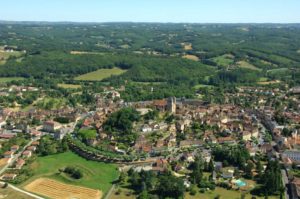
Gourdon is a historic hilltop town in southwest France in the modern département of the Lot and the ancient province of Quercy. This is a beautiful undulating area of woods of oak and chestnut, ducks and geese, walnut groves, fields of maize and tobacco, cave paintings and the majestic rivers Lot and Dordogne – la France profonde. The spectacular palaeolithic cave paintings at Cougnac are less than two miles from the town and we can arrange an afternoon visit for those interested. There is swimming in the town’s lake and further afield in the Dordogne River. The town has a flourishing weekly market and an arts venue in a deconsecrated church, l’église des Cordeliers, which will be our home for the week.
The course
Our plan will be to meet in time for a 5pm session on Sunday the 30th of August. Then in the ensuing week we rehearse all morning, have a long break in the middle of the day to rest the voice, have lunch, a walk, or in Tobias Smollett’s apt words, a recess from labour in a climate that disposes one to idleness. So from Monday to Friday our timetable will be:
09.30 – 11.00 first session
11.00 – 11.30 break
11.30 – 13.00 second session
13.00 – 17.00 long break
17.00 – 19.00 third session
We will arrange a supper for everyone together on the first and last evenings (not included in the fee for the course), but let the party split into smaller groups on the other four evenings. We will give a public performance in the evening of Friday the 4th of September.
Venue
The course will be based in the deconsecrated church of Les Cordeliers, now an arts centre. It is in the historic centre in rue de Colonel Taillade, just off the ring that marks the position of the mediaeval town walls.
Travel and accommodation
Gourdon has a railway station on the line from Paris to Toulouse. This is not a TGV line, but the excellent Man in seat 61 website will tell you how to get to Gourdon from Eurostar or any other European railway. The largely toll-free A20 north-south motorway passes near the town. The nearest airport is Brive (with Ryanair flights from Stansted), also known as Brive-Souillac and Brive-Vallée de la Dordogne. Bergerac is further away, and a larger choice of destinations will be offered by Toulouse and Bordeaux. You arrange your own accommodation. There is a wide choice of places to stay. Gourdon is a holiday destination and has hotels, gîtes (holiday lets), chambres d’hôte (b&bs) and a tourist office. We will send you more information about places to stay when you apply for the course.
Fees and enrolment
The fee for the course is paid in two parts: a deposit of £332 or the equivalent in euros on registration and €400 on or before arrival in Gourdon. The deposit may be credited to another course if you have to withdraw and we are able to allocate your place to another singer. The fee includes payment for a booklet containing all the music for the course, which will be sent to you in advance but not travel, meals or accommodation. The Gourdon Music Party is a course for invited singers, but if you have not received an invitation you may register an interest using the form below.