Jacob Obrecht ~ Missa Sub tuum praesidium, Salve Regina
Josquin des Prez ~ O Virgo virginum, Recordare Virgo
Jean Richafort ~ Offertorium from Requiem
Matthaeus Pipelare ~ Memorare Mater Christi
Jean Mouton ~ Salva nos Domine
Josquin des Prez was the central figure in Renaissance polyphony: all composers before him seem to prepare the way for the brilliant flowering of the polyphonic style under him and his generation, and all that followed are in his debt. In addition to developing imitative and canonic techniques, they were the first to write for larger-scale choral forces. The central work in the is course, the mass by Jacob Obrecht begins with a three-part Kyrie and adds a voice with each successive movement, ending with a seven-part Agnus Dei. The other pieces are mainly for six or seven voices.
Rory Wainwright Johnston is a British conductor and composer based in Berlin. He read music at the University of Manchester, followed by postgraduate studies in composition with Camden Reeves and Nina Whiteman.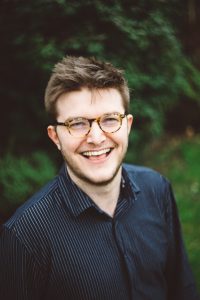 He then moved to Berlin and studied for a master’s degree in choral conducting at the Hochschule für Musik ‘Hanns Eisler’ under Justin Doyle.
Before moving to Berlin he worked with many choirs across the northwest of England and founded Manchester Renaissance Ensemble. He also worked as an associate conductor as part of The Hallé’s choral team. Previously, Rory had assisted Justin Doyle with RIAS Kammerchor’s 2017 performance of Monteverdi’s Vespers of 1610, and Matt Hamilton with the preparation of the Hallé Choir for the Hallé’s performance of Schoenberg’s Gurre-Lieder. In 2018 he was the musical director for Manchester Contemporary Youth Opera, conducting a mixture of University of Manchester and RNCM students alongside the Vonnegut Collective in the production of 5 newly-composed mini-operas. He was also the Young Artist Musical Director for Waterperry Opera Festival in 2019. Rory is currently the musical director of Consortium Vocale Berlin and is regularly engaged as a workshop and course leader for early music throughout the UK.
As a composer, his music has been performed and workshopped by a variety of ensembles from across the UK, including ORA Singers, Kantos Chamber Choir, Echo, Psappha Ensemble, BCMG Next, The Orchestra of Opera North, QuatourDanel, Skipton Camerata, Chester Bach Singers, and Ad Solem.
The course
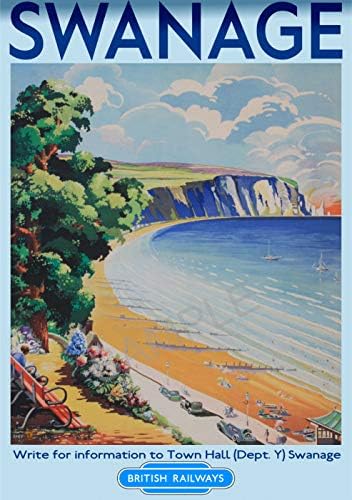
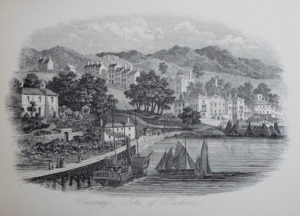
The plan is to convene a group of around thirty-four singers, with more tenors and basses needed than upper voices. 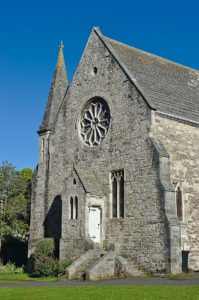 We will be based in the centre of Swanage, in the church of St Mary the Virgin, Church Hill, Swanage BH19 1HU, the ancient parish church of Swanage. Built of Purbeck stone for which the town and district are famous, it has seen Swanage grow from a small fishing hamlet to a sizeable town. Up to the early 19th Century, Swanage was a small fishing port. However, the arrival of the railway meant it developed as a seaside resort and it retains much of its Victorian character to this day.
The Town Hall dates from 1872 and the façade was taken from the Mercers’ Hall in Cheapside London. Swanage became known as ‘little London’ thanks to this and other ‘imports’ from London made by George Burt, a local business man. Behind the Town Hall is a tiny lock-up of 1802, inscribed ‘For the Prevention of Vice and Immorality by the Friends of Religion and Good Order’. We will meet in time for a 5pm session on Monday the 31st of March. Then from Tuesday to Saturday our timetable will be:
09.30 – 11.00 first session
11.00 – 11.30 break
11.30 – 13.00 second session
13.00 – 17.00 long break
17.00 – 19.00 third session
We will arrange a supper for everyone together on the first and last evenings (not included in the fee for the course), but let the party split into smaller groups on the other four evenings. We will give a public performance in the church in the evening of Saturday the 5th of April.
Travel and accommodation
You arrange your own accommodation. Swanage has the usual range of places to stay: guest houses in the town and surrounding countryside, pubs, comfortable hotels and self-catering cottages and flats. In addition to the usual channels there is an official town guide at https://www.visit-dorset.com/explore/areas-to-visit/swanage/. The Purbeck House Hotel is near the church and will probably host the group meals. You can book accommodation there at https://www.purbeckhousehotel.co.uk/. There is information about travel to Swanage by road, rail and sea at https://www.swanage.gov.uk/HowtogettoSwanage.aspx.
Fees and enrolment
The fee for the course is £640, payable in two parts: a deposit of £320 or the equivalent in euros on registration and a further £320 by the 1st of March. The deposit may be credited to another course if you have to withdraw and we are able to allocate your place to another singer. The fee includes the music booklet, which will be sent to you in advance. Accommodation and travel are not included.