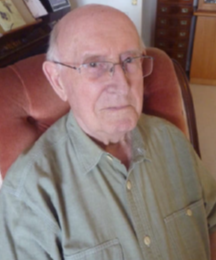
Throughout his long life, as a scholar, conductor, publisher, writer and broadcaster, Bruno was a powerful advocate for Renaissance polyphony and a central figure in the rediscovery of the music of the composers of the Hispanic world. His musical achievements are all the more remarkable for being combined with a successful business career, turning an ailing family firm into a major supplier of specialist wall coverings for offices and hotels (to the bafflement of his warehousemen and invoice clerks – 'what . . . like hymns?'). This interview with Ivan Moody (1964-2024) was first published in NEMA Newsletter in 2021.
Ivan Moody: How did music begin for you?
Bruno Turner: My family was musical. Mother sang lieder, mainly Schumann, Brahms (a little) and could accompany herself. Father did not play, but was an opera enthusiast with an ever-increasing record collection, mainly Wagner and Verdi. Mum said that my first word was ‘moozik' . . . I can recall getting out of the nursery bed and sitting on the stairs to listen to the magical sounds from the drawing room. My childhood included encounters with recorders, a banjo (at 11), ill-fated piano lessons (around 12-13) and jazz trombone (17). I really wasn’t going to be any good at these; anything requiring both hands to function independently was beyond me. I still have not gone beyond one-finger typing. I somehow find my way around my little baroque-sounding electric organ, but just to check odd transcription problems. I sang instead, though not very nicely I think. I learned a little about notation in the choir at school (a Jesuit boarding school) during the Second World War, but the music was boring music. Just one 16th-century piece can I remember. We had Latin, Greek, French, History and English, but no Science at all. I was taken at the age of 16 to Sheffield Town Hall to hear the Hallé Orchestra conducted by Barbirolli. They were performing Sibelius’s 2nd Symphony, which overwhelmed me. I have never ceased to love this music, especially the Symphonies nos. 3, 4, 6 and, above all, 7. Dad, a good man in intentions, but hugely authoritarian and almost fanatically Catholic, had me destined for the family business – textile mills in Derby and the still-surviving London firm (luxury fabrics for coach-built cars). He would not let me go to Cambridge University on the grounds that it was infested by the Church of England and by atheists. The Jesuits pleaded that I had (at 17) two years of Higher Certificate plus a State Scholarship to Cambridge (English and History), and Fr Dudley Ward said I had potential to be a fine scholar. I was sent instead to Leeds University to read for a BCom in textile technology. My maths was almost zero, and I left after two terms. Whist in Leeds, in the autumn of 1948, I went to High Mass at St Anne’s Cathedral. I heard a small choir sing what I later discovered was Palestrina’s Missa Aeterna Christi munera. I thought it the most beautiful thing I had ever heard, and decided to devote all my energy to learning about it and everything like it. I read through most of the Haberl in all its C clefs. That is why I went to London having persuaded Dad to give me a junior job in the London firm.
How did you come to choral music, and specifically early choral music?
I joined a little Catholic choir at St Edward the Confessor in Golders Green. Having sung strangulated tenor for two years, I grabbed the choirmastership when the incumbent left. I thought I knew better than anyone how to do this polyphony! In fact, I was learning on the job. I spent every Saturday morning and afternoon in the Reading Room of the British Museum, and in Manuscripts. I studied everything I could find on harmony and counterpoint and notation, reading Jeppesen and so on. Now you have the extent of my DIY 'training'. In 1949 my father actually got his cousin William Walton (both born in 1902) to arrange an interview for me with Erwin Stein at Boosey & Hawkes. Needless to say, Stein simply said go away and get some training and experience. Of course. And just as well. I joined the Renaissance Society almost as soon as I heard a concert of their Singers under Michael Howard. That was in early 1950. Seeing a naive young enthusiast, Howard and colleagues grabbed me as librarian/dogsbody. I attended most rehearsals and saw how he got results from some 25+ mixed amateurs and a very few pros. He was ferocious and even cruel; he was expert and he got what he wanted. It took some time for me to realize that what he wanted often seemed wilfully to distort the flow of what seemed calmly composed. But at concerts you could be swept up in excitement, only to emerge from the church thinking ‘you can’t do it like that, surely?’. It was never dull, though. Throughout the 1950s I got to the London Oratory as often as I could. I got to know Henry Washington fairly well and met some of the good professional singers who also were the backbone of the Schola Polyphonica. Henry was benign and cultured. At his best, he produced the finest Palestrina I have ever heard, elegant and poised, the accents and flow celestial, very pure, very clear, using very Italianate vowels with crisp consonants. At his worst, he could be lazy and careless, concerned with drink and fine cooking. My future wife sang for the Schola and experienced his habit of forgetting (avoiding?) to pay his singers. I can’t say that Westminster Cathedral Choir influenced my own (later) approach, but the effect of George Malcolm’s boys, with their shawm-like edge and attack, hurled at you down that colossal nave was awesome, a kind of magisterium in sound. I am privileged to have been alive to witness the last of the old Latin liturgy in all its power and pomp.
Could you say something about your entry into the world of editing polyphony?
In my 1950s beginnings as a transcriber-editor of 16th-century music, mainly English Tudor, I was corrected and advised very kindly but severely by Thurston Dart, entirely by letter, and often in paragraphs written alternately in red and black. He was on the Council of the Plainsong and Mediaeval Music Society at the time. We never really conversed, but he was generous in correspondence. Neither did I get much out of Dom Anselm Hughes (R. R. Terry’s “bogus monk”). Denis Stevens was very helpful and a model, at first, for me. Frank Harrison, rather later, was very friendly, helpful, and great to have a drink with. And another drink, and another . . .
And subsequent performing adventures?
In 1957 I put together a little choir, never more than twelve voices, based on singers from my liturgical Sunday choir and local amateurs plus two or three 'pros'. We gave concerts at Notre Dame de France, Leicester Square, known to some as ‘Notre Dame de Bambi’ (Jeremy Noble’s noting of the deer in the tapestry behind the altar). I offered to give a concert for the 70th anniversary of the Plainsong and Mediaeval Music Society, and in 1958 Pro Musica Sacra did so in St George’s, Bloomsbury. H. B. Collins’s edition of the anonymous Missa O quam suavis was sung, inter alia. Denis Stevens came up to me afterwards and said he’d like us to do an Eton Choirbook piece for the BBC. I said we’d not had an audition, to which he replied ‘you just have’. We included Gilbert Banester’s O Maria et Elizabeth. The next year Peter Crossley-Holland, briefly in charge of ‘pre-classical’ (‘early music’ had not yet been invented!), took one look at my manuscript edition of Shepherd’s Missa Cantate and said yes. So we had started with the Third Programme properly. There followed a spate of BBC events: Shepherd’s (the spelling “Sheppard” only just recognized . . .) hymns, Taverner, Tallis, Byrd, even Weelkes and Gibbons, plus Palestrina. Some broadcasts were planned by Jeremy Noble. Basil Lam was the pre-classical man for quite a few years, and I learned quickly that one should go along to Yalding House armed with more than proposals. I went in with precise programmes, fully timed, with editions all prepared. It saved Basil doing any work. That appealed to him: he could present detailed plans at producers’ meetings. Well done, Basil. In November 1959, Stravinsky came to London, after Venice, to be present at the BBC’s Maida Vale Studio 1 for his own Mass and Octet for Winds to be given at one of William Glock’s trial runs for what became his Thursday Invitation Concerts. It was Jeremy Noble who put my ensemble Pro Musica Sacra forward and met Stravinsky’s request for something old with the Tallis Lamentations. So it came to pass on, I think, a Tuesday, in serious November fog, that we performed the Tallis, directed by me. Robert Craft took the Mass with a wind band (I can’t recall the name). He wanted to know how long we had rehearsed the Mass. I said we’d had a sing through the night before but left proper rehearsal to him on the day. He was amazed, saying that in Venice the choir had worked on it for weeks and were still insecure. This may have got through to the great man, who was wrapped up in multi-scarves against the fog that was coming in through the studio’s so-called air-conditioning. It got so bad that Stravinsky stayed in his hotel that evening and did not attend the concert. But before he left the afternoon rehearsal the old man, hastily introduced to me, said, ‘With such a choir we should do the Symphony of Psalms’. I said, ‘But we are just thirteen singers’. He replied, ‘With modern technology everything is possible’. So ended my historic thirty-second conversation with greatest composer of the 20th century. Pro Musica Sacra was rarely more than twelve to fourteen singers. We gave very few concerts, but at least four BBC Third Programme recitals per year until early 1964. The big events were Ockeghem’s Requiem for a Glock concert, and then, at my own request, Taverner’s Missa Gloria tibi Trinitas. The latter resulted in a recording run by the one-eyed Belgian Abbé Carl de Nys on Disques Lumen/Schwann on stereo LP in 1962; I think the first ever of a full Taverner Mass. Then in March 1964 I had to stop musical activity. My wife Doreen had a terrible car accident. She was not out of hospital until August that year. Our son had to be sent to his grandparents on the Isle of Wight. The business was in a precarious state as I finally changed it radically. And so, to be short, I suspended music performance for what became three years.
One of the things with which you have been in various degrees associated is ‘liturgical reconstruction’. Could you say something about this?
1963 was the 75th anniversary of the foundation of the Plainsong and Mediaeval Music Society, formed in 1888. I devised a Missa in Gallicantu according to the Sarum Use. St George’s Bloomsbury resounded to the full Propers and the Ordinary to Fayrfax’s Missa Tecum principium with full troped Kyrie (chant), and the troped Lesson as set by Sheppard. There was an expanded choir of chant singers, and it went down well. The BBC took notice. In 1968 they asked me to repeat it for transmission at Christmas. I had to turn it down. They asked John Hoban to do it with his Scuola di Chiesa but with my advice and presentation. We changed the polyphony to Sheppard’s Missa Cantate, and I think they did it well enough. I did my first spoken introduction, recorded at a lone table in BBC Concert Hall in the November, with one mic, one glass of water, no producer, just a remote studio manager and my own script . . . all stiff and formal. Listening to the transmission made me realize how I must learn to communicate. I later received wonderful help from Michael Mason, a notable features producer. Years later Hugh Keyte told me of his research that showed the Sarum Missa in Gallicantu was the first public liturgical reconstruction he could find, and he organised a spate of them in his era at the BBC.
And what of your subsequent connection with Pro Cantione Antiqua?
In 1968 Pro Cantione Antiqua contacted me. Basil Lam had recommended me as a possible director/repertoire guide. And thus a new era started for me. Pro Cantione Antiqua had several conductors in its first couple of years, but I started its broadcasts with a half hour that I entitled ‘Felices Jodoci aemulatores’, never thinking it would be accepted. It was! Yes, that title in the Radio Times. Such then was elitism, before its decline and fall: Josquin, Mouton, Févin et al. PCA went to Germany on a little tour, the nine singers plus me – four concerts and one WDR broadcast. We came back with ten shillings each. The next year we went again: four broadcasts, one recording and one concert. We came back with fees you’d never have got from the BBC. Pro Cantione Antiqua was led commercially by James Griffett. He was the bulldozer – ‘we’re the best’; I followed with proposals in detail. That worked. We made LPs with German Harmonia Mundi-DHM (Dr Alfred Krings), and with DG Archiv. After our first (Byrd and Tallis) with the latter, Dr Andreas Holschneider, visiting London, walked with me in the park by Marble Arch, and asked what I would like to propose as the first in a possible series. ‘Ockeghem’s Requiem’, I said. “And next?” ‘Ockeghem’s Requiem’. ‘And?’ ‘Ockeghem’s Requiem’. ‘It shall be’. We went on to make ten LPs for Archiv. Similarly with DHM, but with no plan, often at the sudden whim of Dr Krings. We were featured for several years at the annual festival at the Schloss Kirchheim. Pro Cantione Antiqua was very much into European touring, not always requiring a conductor, and often directed by Mark Brown, a founder member, later one of the most respected of recording producers. I believe it made one big mistake: it almost never gave concerts in Britain. In over thirty years, it probably appeared fewer than four or five times. PCA’s most intensive recording period was in the 1970s and 1980s. It continued in the 1990s with more visits to give concerts in Spain. I directed concerts at El Escorial and in Madrid, and especially remember giving Guerrero’s 1566 Requiem in Seville Cathedral in 1999 on the composer’s 400th anniversary, just yards from his tomb. But that great building has the dullest of acoustics! PCA was always rather variable in its roster of singers over the years. At the beginning there were intonation problems on account of the distinctive voices having quality clashes when singing two to a part. Then it became the norm to sing one voice to each part, a proper consort. Despite the risk of too much individuality, it was clear that the group’s character was in that contrast. I always considered it worth a little roughness, rather than a sanitised over-blending of timbre. Historically the singers in cathedral or courtly establishments were sought and bought for outstanding voices. I rather liked a remark by the director of the Leningrad Glinka Choir, on a UK visit, many years ago, when asked (rather pointedly) about blend. He simply said, ‘I have a bouquet of voices’. For my part, I do not want the two equal canonic top voices of, say, Guerrero’s Ave Virgo sanctissima, to sound identical, I want them distinctive. And so on . . . and on. At its best, for instance the LPs/CDs of Spanish masters entitled El Siglo de Oro (Das Alte Werk, Telefunken), satisfied my best wishes for this repertoire, especially in works by Victoria, Ceballos and Alonso Lobo (O quam suavis is a masterpiece, beautifully rendered with individuality). I would say that, wouldn’t I? Enough.
How did all this activity feed into your work as a transcriber and editor?
In the mid-1970s, busy at my firm, busy with PCA and, after a few years of observing all that is in Stevenson’s great book Spanish Cathedral Music, I felt I must do something about publishing editions of Hispanic repertoire specifically for modern performance, in affordable separate copies notated at practical pitches for the choirs of here and now, in church or in halls, not stuck in the deep-freeze of ‘Opera Omnia’ to please academe, however worthy of study. In early 1977 I put an advert in Early Music. I had one reply. Martyn Imrie filled the bill. We got on. My firm could finance moderate costs and salary. He got started and from then on you know it well. Martyn does not get the credit he deserves. Maybe he should get written up soon. Also in 1977, Coro Cappella was started by Andrew van der Beek, with four concerts of which I conducted the last, which was Spanish repertoire and was taken by the BBC. Thus was confirmed my slide down what John Milsom later called the ‘Spanish Drain’. Alcantarilla is a much nicer word. Martyn and I began to accumulate sources, mainly on microfilm. Our collections are now very extensive. Mine includes a great deal of 15th-16th-century liturgical chant. I still try as far as possible to find chant versions that are compatible with the polyphony, especially for completing editions of alternatim hymns. I think it was in that period that most singers called me a musicologist and most academics, colleagues on the Council of the Plainsong and Mediaeval Music Society would regard me as a ‘practitioner’. I didn’t mind at all; I don’t like pigeonholes. Of course, a few would say ‘Oh, he’s just a businessman’. In fact, my business did do rather well after a struggle through the 1960s. It enabled me to make and support many music projects. So really I would say that I have been an enabler.
And you continued to perform . . .
Pro Musica Sacra, a small mixed choir, was revived from time to time for occasional concerts and broadcasts. I got to know Musica Reservata de Barcelona and directed a few concerts with them. Not high-power professionals, but very musical and utterly delightful. Eventually I got them down to Almería twice when I lived there and gave a concert Vespers, and also Duarte Lobo’s eight-voice Requiem. I continued to direct PCA fairly often, sometimes in splendid venues: El Escorial; San Juan de los Reyes, Toledo; Seville Cathedral, Encarnación Convent in Madrid – Peñalosa L’homme armé, Guerrero Missa pro Defunctis, Victoria Requiem for six voices and so on. I lived for eleven years in Almería with a few months in the UK each year. I sold the business finally in 1996, and in 2005 we sold the Spanish house. It turned out to be a fortunate decision – 2008 brought recession and the property crash. Now, in the time of Covid, I combat my inherent laziness by continuing to have little targets and hurdles, the only way to get things done. I’m particularly glad to investigate and transcribe pieces of merit by composers hardly known. I’m a bit sad at the way things in England have been going, but I’m old and getting tired. I go back occasionally to my jazz and blues days, and to Bessie Smith and Louis Armstrong with their St Louis Blues . . . ‘Ah hate to see that evenin’ sun go down’.
Links
Tess Knighton and Bernadette Nelson (eds), Pure Gold: Golden Age Sacred Music in the Iberian World: A Homage to Bruno Turner (Kassel, 2011), http://www.reichenberger.de
Mapa Mundi https://www.mapamundimusic.com
Pro Cantione Antiqua https://en.wikipedia.org/wiki/Pro_Cantione_Antiqua