Alonso Lobo ~ Tristis est anima mea, Missa Beata Dei genitrix
Francisco Guerrero ~ Beata Dei genitrix, Regina caeli laetare
Rodrigo Ceballos ~ O Virgo benedicta
Philippe Rogier ~ Laboravi in gemitu meo, Regina caeli,
Laudate Dominum, Sancta Maria
Rory McCleery writes: I am very pleased to be invited to this historic city in Andalusia, ‘la tierra de María Santísima’. It will be an opportunity to explore the rich seam of Marian music by three composers very dear to me: Francisco Guerrero, ‘el cantor de Maria’, his contemporary Rodrigo Ceballos and his pupil and successor as Seville’s maestro de capilla Alonso Lobo. Lobo’s Liber primus missarum contains six mass settings, all but one of which are based on motets by Guerrero. Of these, perhaps the most beautiful is his Missa Beata Dei genitrix for six voices, a scoring shared by Lobo’s Passiontide motet Tristis est anima mea. Similarly lacrimose is the Laboravi in gemitu meo by Philippe Rogier, a boy treble from the Low Countries in the chapel of Philip II who would go on to become first vicemaestro and then maestro de capilla to the king. Both Rogier and Guerrero explored the exciting possibilities of the antiphonal double choir style, and we will compare their settings of the Marian antiphon Regina caeli, as well as enjoying the polychoral fireworks of Rogier’s Laudate Dominum.
Since his Lacock debut in the Corsham Lamentations course in 2022, Rory McCleery has become a regular course director. He began his musical training as a chorister at St Mary’s Episcopal Cathedral, Edinburgh, subsequently reading music at Oxford, where he was both Organ and Domus Academic scholar at St Peter’s College before completing an MSt in musicology with distinction at The Queen’s College. 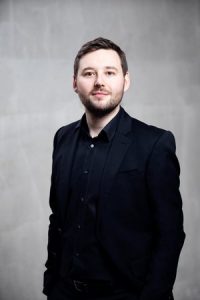 He is the founder and artistic director of The Marian Consort and has conducted the ensemble in concert across the UK, Europe and North America. Under his direction, The Marian Consort has recorded extensively and become renowned internationally for its compelling interpretations of a wide range of repertoire, particularly the music of the Renaissance and early Baroque, and works by contemporary British composers, and has been nominated for a Gramophone Award.
He has led workshop sessions, study days and singing courses across the UK, Germany, Spain and the USA, working with choirs of all ages and sizes in repertoire from the Renaissance to the present day. A vocal advocate for the music of the Renaissance to all audiences, Rory has written articles for both specialist academic publications and broadsheet newspapers, and appears regularly on BBC Radio 3.
Rory is also active as a countertenor, performing at venues including the NOSPR in Katowice, Edinburgh’s Usher Hall, the Concertgebouw Bruges, and the Royal Chapel of the Palace of Versailles. He has appeared as a soloist for broadcasts on ARTE, Radio France, BBC Radio 3 and German, Italian and Polish national radio, and in concert and recording with The Monteverdi Choir, La Nuova Musica, The Dunedin Consort, The Orchestra of the Age of Enlightenment and The Berkeley Ensemble among others. Rory also has a particular affinity for new music: he features on The Night With’s award-winning album release, and recently premiered a major new work by Graham Fitkin for countertenor soloist, orchestra and chorus.
Rory is a passionate believer in the importance of music education and singing for young people and is co-founder with his wife, harpist Rachel Wick, of Dunster Festival in West Somerset.
Click the ‘practicalities, fees & enrolment’ tab at the top of this page for further details.
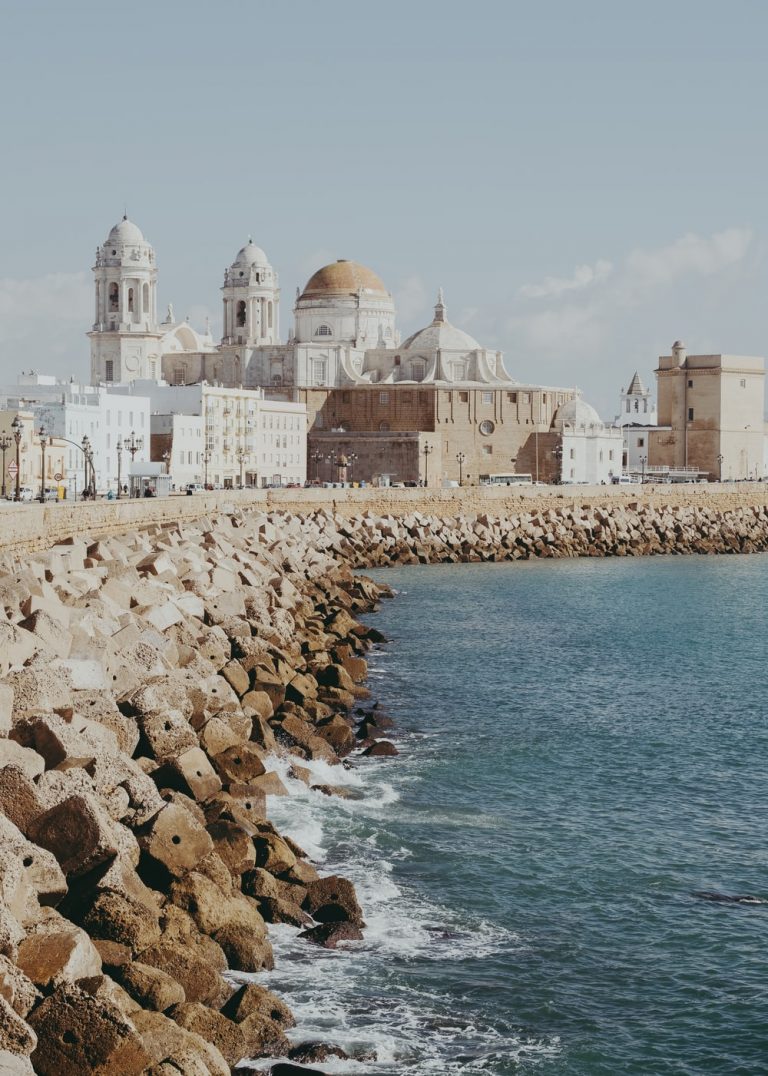
Cádiz
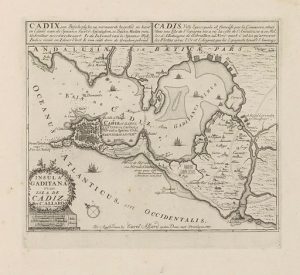
With its southerly latitude and Atlantic outlook, Cádiz is famed for its winter climate; early spring is likely to be very agreeable. The city stands on a peninsula jutting out into a bay, almost entirely surrounded by water.
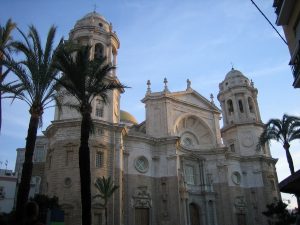
Named Gadir by the Phoenicians, who founded their trading post in 1100 BC, it was later controlled by the Carthaginians until it became a thriving Roman port. It sank into oblivion under the Visigoths and Moors, but attained great splendour in the early 16th century as a launching point for the journey to the newly discovered lands of America. The city was later raided by Sir Francis Drake in the struggle to gain control of trade with the New World, and managed to withstand a siege by Napoleon’s army. The course will be held in the historic (an understatement: no city in the western world has been occupied longer) centre, in the church of the Convento de las Reparadoras, Calle Zaragoza 14, 11003 Cádiz, very near Plaza San Antonio.
The course
Our plan will be to meet in time for supper on Sunday the 7th of March. Then from Monday to Friday our timetable will be a slight variation on the normal Lacock pattern to accommodate a daily mass in the church:
09.15 – 10.45 first session
10.45 – 15.00 long break
15.30 – 17.00 second session
17.00 – 17.30 break
17.30 – 19.00 third session
We will arrange a supper for everyone together on the first and last evenings (not included in the fee for the course), but let the party split into smaller groups on the other four evenings. We’ll give a public performance in the evening of Friday the 12th of March.
Travel and accommodation
The nearest airport is Jerez, with flights from England with Ryanair, Tui and Vueling and elsewhere in Europe with Eurowings, Condor and Edelweiss.
There is a direct train from the airport to Cadiz and the journey takes just under an hour. Other possible airports are Seville and Gibraltar. From the excellent Man in seat 61 website you can find out how to reach Cádiz by train. You arrange your own accommodation. There is a wide choice of places to stay in the historic centre itself.
Fees and enrolment
The fee for the course is paid in two parts: a deposit of £347 (or the equivalent in euros) on registration and €400 on or before arrival in Cádiz. The deposit may be credited to another course if you have to withdraw and we are able to allocate your place to another singer. The fee includes payment for the music booklet, which will be sent to you in advance, but not meals, travel or accommodation.